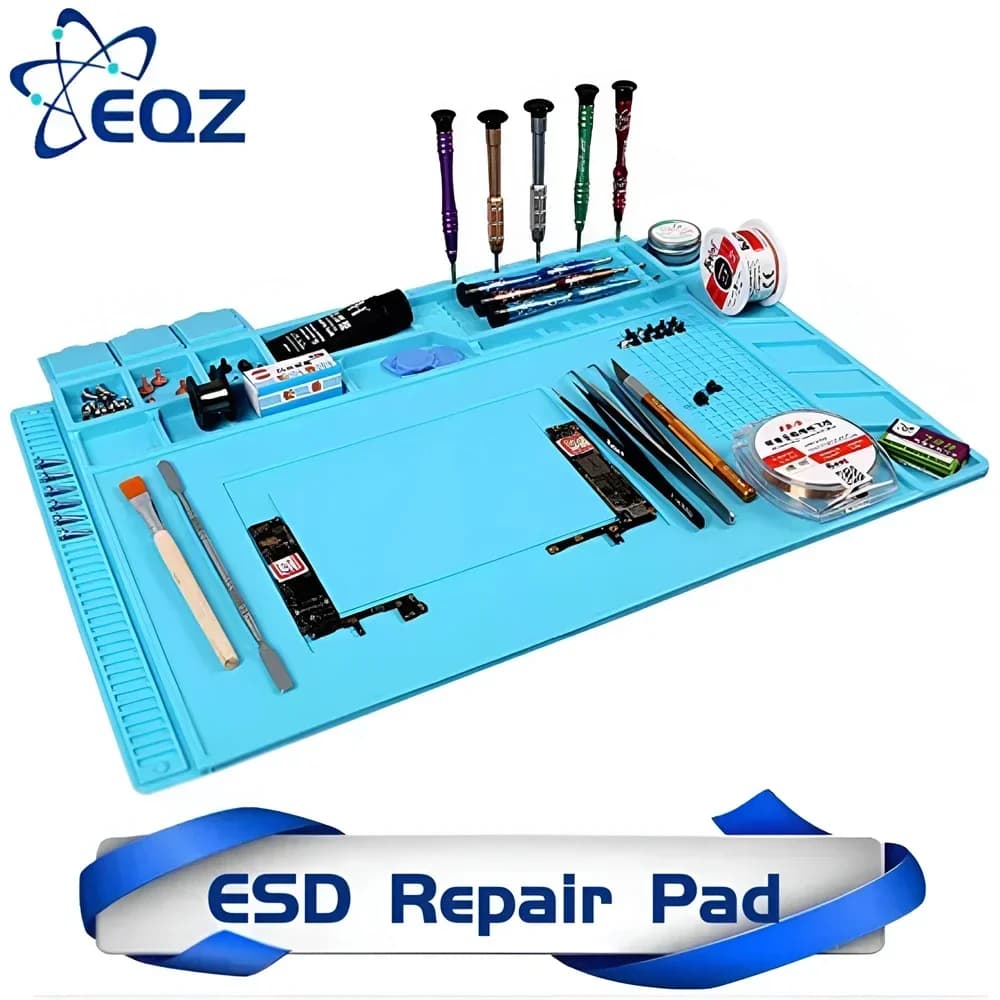
How to Choose a Work Mat for Mobile Technicians — The Complete Guide
March 28, 2026
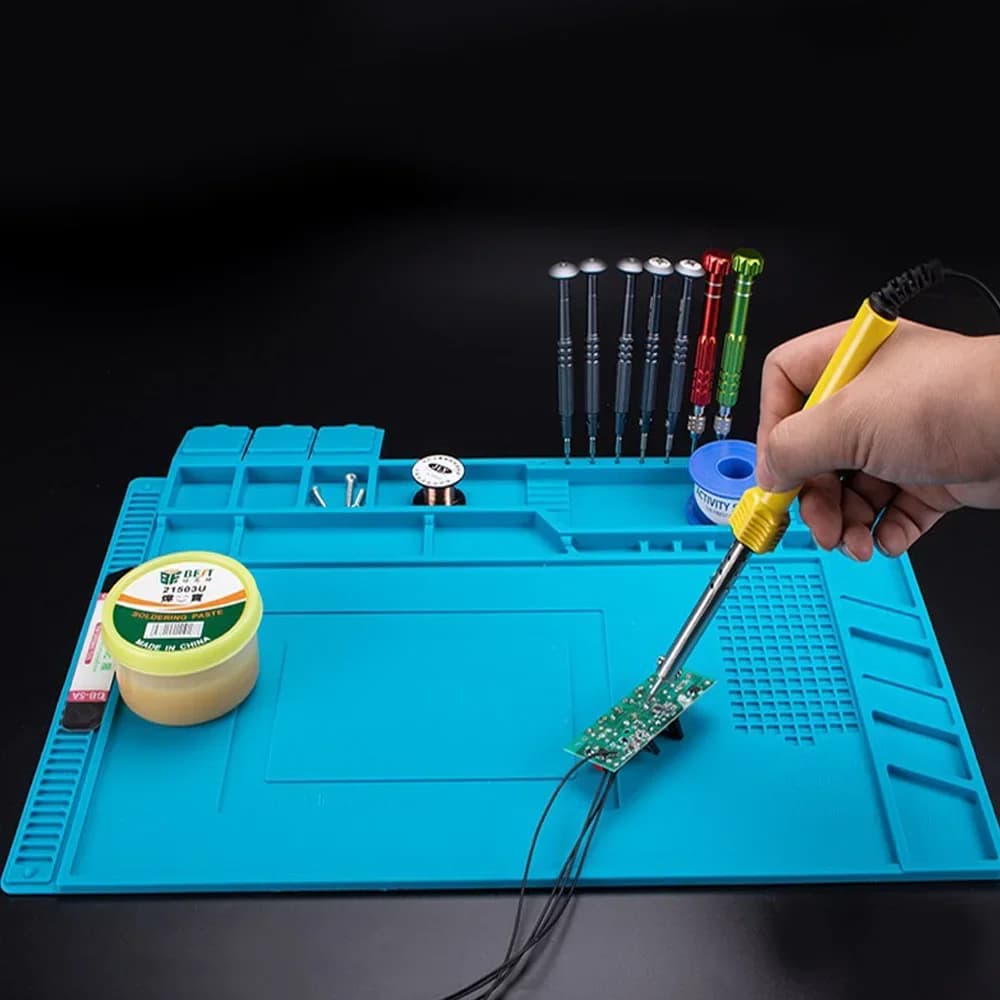
As a mobile technician, your work mat is one of the most important tools in your shop. It is not just the surface on which you place the phone — it is the first line of defense for the sensitive components you work with. There are several types of work mats on the market, and it is not always easy to know which one suits you.
Why Does the Work Mat Matter?
A modern smartphone contains thousands of tiny components: screws as small as 0.6mm, fragile connectors, flex cables, and sensitive batteries. Working without a proper mat exposes you to:
- Lost screws — they roll and disappear in seconds
- Scratched screens and back covers — damaging expensive parts the customer trusted you with
- Electrostatic discharge (ESD) — undetected static voltage can destroy motherboard components
A quality work mat solves all three problems simultaneously.
Types of Work Mats
1. Silicone Mat
Main advantage: Heat resistance up to 300°C. When working with a soldering iron, heat gun, or industrial hair dryer — a silicone mat will not melt or crack. It is also flexible, easy to clean, and provides good grip for the phone.
Best for: Any heat-related work — screen replacements, heating back covers, PCB-level soldering.
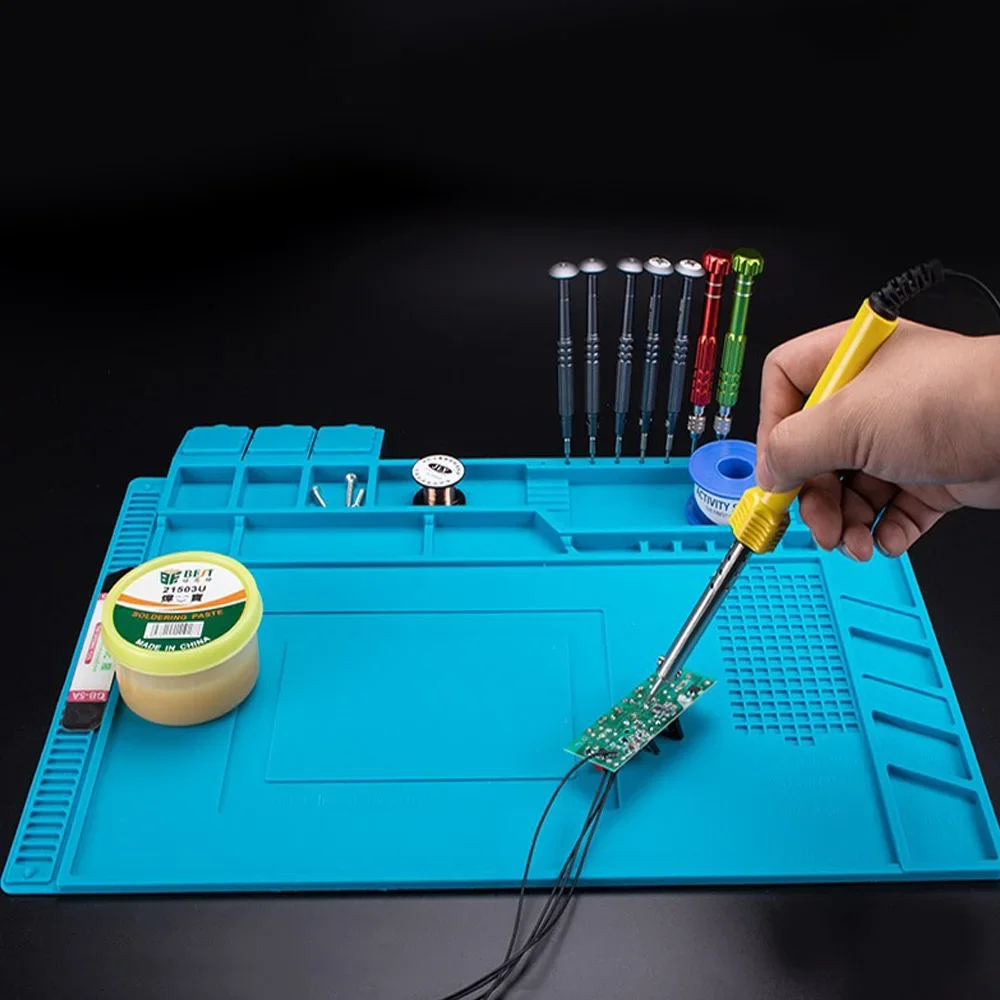
2. Anti-Static (ESD) Mat
Main advantage: Neutralizes static electricity. Touching a motherboard component without grounding risks invisible damage to IC components. An ESD mat eliminates this risk.
Best for: Micro-soldering, motherboard work, BGA rework.
3. Magnetic Mat
Main advantage: Screws stick to it and do not roll away. Absolutely essential when disassembling a device with dozens of screws of different sizes.
Best for: Screw sorting and disassembly, focused work on a single device.
4. Combination Mat
Advanced mats combine multiple layers: a heat-resistant silicone layer, an ESD grounding layer, and corner pockets for screw storage. Often printed with a disassembly diagram of popular models. This is the preferred solution for professional technicians working at high volume.
Size — Which Size Is Right?
| Size | Best For |
|---|---|
| 30×20 cm | Single device, small desk |
| 40×30 cm | Work with tools beside it — recommended |
| 60×40 cm and up | Full workstation, multiple devices at once |
Recommendation: For most technicians, 40×30 cm is the ideal size — large enough for comfortable work without taking up too much desk space.
What to Check Before Buying
- Heat resistance — Is a maximum temperature listed? Look for at least 200°C
- ESD certification — Not every black mat is anti-static. Look for explicit labeling
- Thickness — 3–5 mm provides good cushioning and grip
- Washability — Can it be rinsed? Silicone can be fully washed
- Brand — Very cheap mats do not meet their stated temperature ratings. Invest in a tested brand
FAQ
Can I work without a mat?
Technically — yes. Practically — you risk scratching a customer's device, losing screws, and ESD damage. After the first time you pay out of pocket for a scratched screen, you will understand the value.
How long does a quality mat last?
A quality silicone mat lasts 3–5 years with daily use. Time to replace it when it starts sticking to equipment or losing its flexibility.
Summary
For a technician looking for one solution that covers everything: a combined silicone mat with an ESD layer, 40×30 cm. It can withstand heat, protect against static, and make daily workshop organization easier.